

Crypto Custody Review for Serious Borrowers
A crypto custody review for borrowers: assess control, insurance, security, collateral segregation, bankruptcy terms, and rules before pledging assets.
A crypto custody review for borrowers: assess control, insurance, security, collateral segregation, bankruptcy terms, and rules before pledging assets.

With more than 250 digital assets, institutional-grade cold storage, and personalized broker support, Caleb & Brown is bringing a different experience to the cryptocurrency market. By Roger Powers | Crypto Loan Advisor | Crypto Pulse The cryptocurrency industry has spent much of its history emphasizing technology, automation, and the elimination of traditional financial intermediaries. But as digital-asset portfolios grow, investors are discovering that technology alone does not answer every question. How do you execute a substantial Bitcoin transaction without unnecessarily disrupting the market? What happens when you want to convert cryptocurrency into dollars and transfer the proceeds to your bank? Who can you call when you need assistance with a complex transaction? And perhaps one of the most overlooked questions: What happens to your cryptocurrency when you die? These are the types of challenges Caleb & Brown has built its business around. Founded in 2016, the cryptocurrency brokerage reports serving more than 60,000 clients, with offices in Australia and the United States. Its core proposition is personalized premium service, combining digital-asset trading with access to a personal broker. For investors accustomed to navigating cryptocurrency exchanges alone, that represents a different approach to managing digital wealth. A Personal Broker in a Digital World One of the distinguishing features of Caleb & Brown is its emphasis on human relationships. Rather than relying exclusively on automated systems and online support tickets, clients can contact their personal broker by telephone or email. According to the company, brokers assist with portfolio construction, cryptocurrency education, trading strategies, and transaction execution. The company describes its offering as a 24/7 personalized brokerage service, with clients able to contact their broker as often as needed without an additional charge for broker access. For someone purchasing their first Bitcoin, that relationship may help them understand the transaction process. For a long-term investor holding a substantial digital-asset portfolio, the conversation may involve liquidity, diversification, or executing a complex trade. The value proposition is straightforward: cryptocurrency investors can access technology without giving up the ability to speak with another human being. More Than 250 Digital Assets and Direct Crypto Swaps Cryptocurrency portfolios have evolved considerably beyond Bitcoin and Ethereum. Investors increasingly hold combinations of Bitcoin, XRP, Ethereum, Solana, and other digital assets, creating a need for trading services that can accommodate more complex portfolios. Caleb & Brown reports supporting more than 250 digital assets, allowing clients to buy, sell, and swap cryptocurrencies. The company also facilitates direct cryptocurrency-to-cryptocurrency swaps. For example, an investor seeking to exchange XRP for Solana can execute a direct swap rather than manually selling XRP, transferring the proceeds, and purchasing SOL in separate transactions. This can simplify portfolio adjustments, particularly for investors managing multiple digital assets. Importantly, cryptocurrency swaps may create taxable events depending on the investor’s jurisdiction and circumstances. Turning Cryptocurrency Into Spendable Dollars At Crypto Loan Advisor, we frequently discuss an important distinction between wealth and liquidity. A person may hold a substantial cryptocurrency portfolio while still needing dollars for real estate, business investments, retirement, or everyday expenses. There are generally two different paths to obtaining that liquidity: selling digital assets or borrowing against them. Caleb & Brown specializes in cryptocurrency brokerage services, including helping clients sell digital assets and withdraw the resulting fiat currency. According to the company’s supplied service information, it facilitates the conversion of cryptocurrency into fiat and the transfer of proceeds to a client’s nominated bank account, advertising zero withdrawal fees and no withdrawal limits. That distinction deserves attention. A cryptocurrency transaction is not necessarily complete when the asset has been sold. Investors also need a reliable process for transferring the proceeds into the traditional banking system. Trading costs and any applicable spreads should still be reviewed separately from withdrawal fees. For investors evaluating whether to borrow against their crypto or sell a portion of their holdings, understanding the mechanics and costs of both options is essential. Professional Trade Execution Matters Anyone who has executed a substantial cryptocurrency transaction understands that the displayed market price and the final execution price are not necessarily identical. Market liquidity, volatility, order size, and slippage can influence the amount an investor ultimately receives. Caleb & Brown reports using a team of experienced traders, multiple liquidity partners, and different trading techniques to seek competitive market execution. One technique identified by the company is Time-Weighted Average Price, or TWAP. TWAP involves spreading a transaction across a period of time rather than executing the entire order immediately. Depending on market conditions, this approach may help reduce the market impact of a larger transaction. It does not guarantee a better price, but it illustrates why execution strategy can become increasingly relevant as cryptocurrency portfolios grow. Institutional-Grade Cold Storage For long-term cryptocurrency holders, asset security is another essential consideration. Caleb & Brown offers an institutional-grade cold-storage custodial solution designed to protect client cryptocurrency assets. Cold storage generally refers to keeping cryptocurrency private keys in systems that are not continuously connected to the internet. This can reduce exposure to certain online security threats, although no custody arrangement eliminates every potential risk. Investors considering custodial services should understand who controls the private keys, how withdrawals are authorized, what protections exist, and what happens if the service provider experiences financial or operational difficulties. At Crypto Loan Advisor, we encourage investors to examine custody arrangements carefully, particularly when digital assets may eventually be used as collateral for a cryptocurrency-backed loan. What Happens to Your Crypto When You Die? One of the most interesting aspects of Caleb & Brown’s offering concerns digital-asset inheritance. Traditional financial accounts generally have established procedures for transferring assets following the death of an account holder. Cryptocurrency can introduce additional complications. Private keys, wallet access, account ownership, legal documentation, and beneficiary instructions can all become significant issues for surviving family members. Caleb & Brown states that its brokers and legal team work with executors and relevant authorities to facilitate the transfer of a deceased client’s digital assets to their rightful beneficiaries. This is an important conversation for long-term cryptocurrency holders. Building

Digital asset collateral valuation guide for crypto borrowers: learn LTV, haircuts, liquidation prices, and safer ways to preserve portfolio flexibility.

Crypto loans versus HELOC: compare collateral, rates, tax considerations, repayment terms, and liquidation risk before you borrow against assets carefully

A collateral insurance review for crypto borrowers: what coverage may protect, what it excludes, and how to assess lender, custody, and liquidation risk.
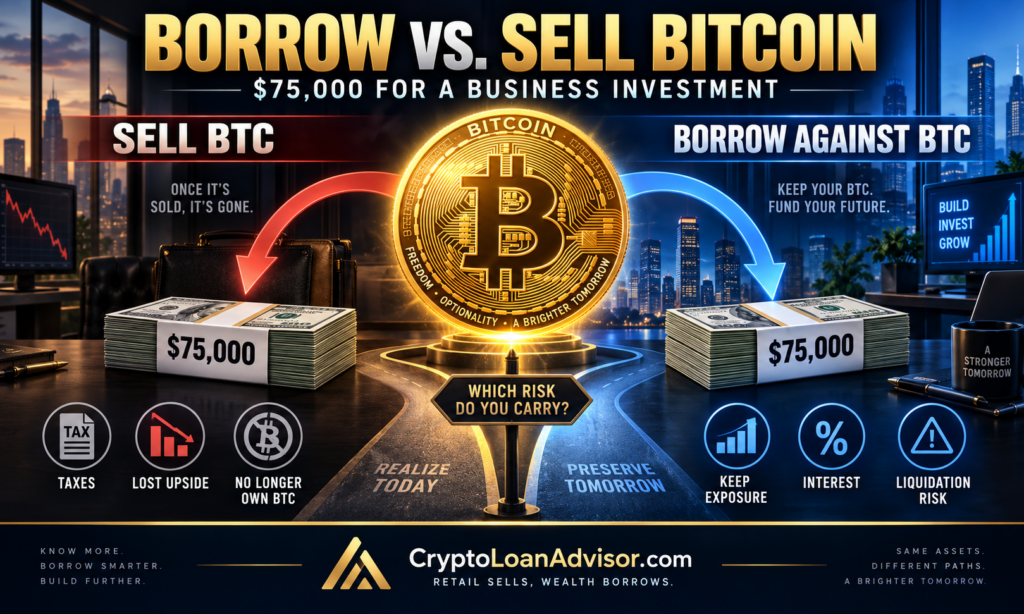
Compare crypto borrowing versus asset sales with a clear framework for taxes, upside, LTV, liquidation risk, costs, and your liquidity needs up front.

Learn how to compare loan terms for crypto-backed borrowing, from APR and LTV to liquidation risk, collateral custody, fees, and repayment flexibility.

Learn how to use crypto collateral for liquidity, compare LTV and loan terms, and manage margin-call and liquidation risk without selling core holdings.
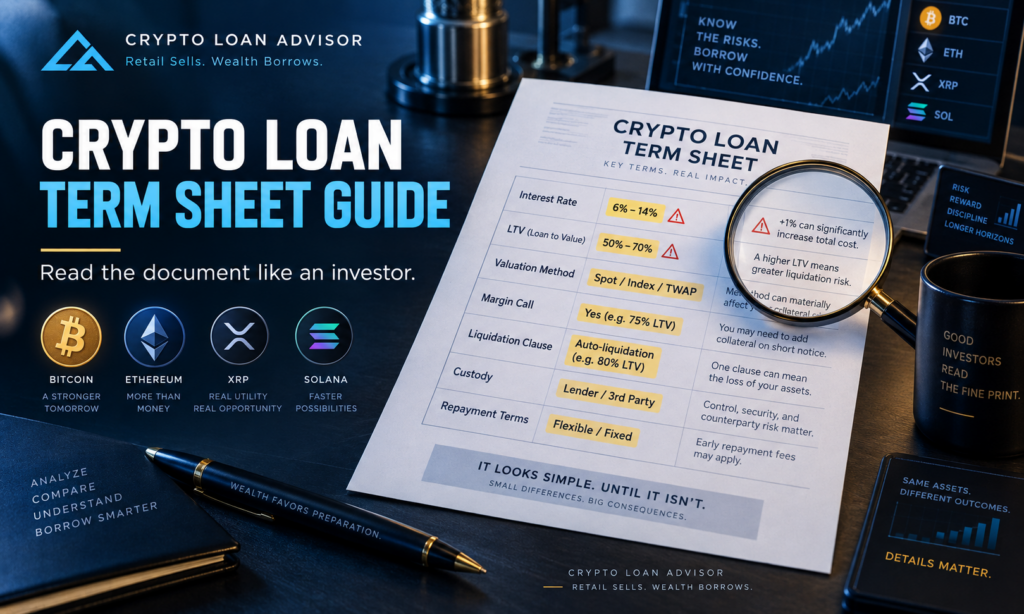
This crypto loan term sheet guide explains rates, LTV, collateral, liquidation, and lender terms so you can borrow against digital assets with confidence.

Crypto collateral safety depends on conservative LTV, clear liquidation terms, and lender due diligence before you borrow against digital assets wisely.