

Are Crypto Loans Secured Debt? What It Means
Are crypto loans secured debt? Learn how collateral, custody, liquidation, and lender terms shape your risk before you borrow against digital assets first.

Are crypto loans secured debt? Learn how collateral, custody, liquidation, and lender terms shape your risk before you borrow against digital assets first.

Learn how to calculate crypto LTV, set a safer borrowing range, and assess margin call and liquidation risk before using Bitcoin or altcoins as collateral.

Three developments are getting the crypto community’s attention. DTCC is moving forward with tokenized securities. XRP has a new official presence on X. And Cross River Bank—the bank connected to X Money—has announced an integration involving Ripple’s dollar stablecoin on the XRP Ledger. Are we watching the pieces come together for X Money’s next big move? Possibly. But there’s a difference between seeing a potential connection and having a confirmed announcement. Today, let’s look at what happened, how these developments might connect, and what we still need to see. Let’s start with DTCC. DTCC is part of the infrastructure behind securities markets. Through its subsidiary DTC, it helps safeguard assets and support the movement of securities. In May, DTCC announced plans for limited production transactions involving tokenized securities in July, followed by a service launch targeted for October 2026. In July, it reported that real production trades using DTC-tokenized assets had taken place. That matters because tokenization is moving beyond presentations and experiments into actual financial transactions. (dtcc.com, tradeweb.com) What does tokenization mean? Think of it as representing an asset on a blockchain, with rules connecting that digital representation to the underlying asset and its ownership rights. But here’s where we need to be precise. DTCC’s progress does not establish that X Money will use XRP. It also does not mean all the assets held at DTC are suddenly moving onto the XRP Ledger. This is evidence of a larger shift in financial infrastructure. It is not, by itself, evidence of a partnership with Elon Musk’s payments platform. Now, the second development. On October nineteenth, the @XRP account debuted on X and received public welcomes from Ripple and the XRP Ledger Foundation. That is a meaningful communications development for the XRP ecosystem. However, a dedicated social media account is not the same thing as XRP becoming a payment option inside X Money. The debut did not announce that functionality. (crypto.news) If you see a headline saying “XRP is officially on X,” read carefully. In this case, we’re talking about an account on the platform. We still need a separate announcement confirming any payments integration. Now let’s get to the connection that deserves the closest attention: Cross River Bank. Cross River announced that it is integrating RLUSD—Ripple’s U.S. dollar-backed stablecoin—into its banking platform, with support for transactions on the XRP Ledger. The announcement describes access through a single API connection, bringing blockchain payments alongside traditional banking services. The intended uses include cross-border payments and treasury movement around the clock. The announcement also notes that services are currently available only in limited states. (businesswire.com) Why does that get people thinking about X Money? Because Cross River also provides banking infrastructure for X Money. AP reported that relationship when it covered X Money’s invite-only launch in July. (apnews.com) So there is a real connection worth following. A bank serving X Money is adding a payment capability involving Ripple’s stablecoin and the XRP Ledger. My interpretation is that this creates a plausible route for future integration—if X chooses it and the necessary product, technical, and compliance work is completed. But a capability offered by a bank does not automatically become a feature used by every company working with that bank. We still need confirmation from X. There’s another distinction that matters. Ripple is the company. The XRP Ledger is the blockchain. XRP is its native digital asset. RLUSD is a separate dollar-backed stablecoin. The Cross River announcement centers on RLUSD payments using the XRP Ledger. It does not announce that X Money customers will hold XRP or that their transfers will use XRP as a bridge asset. (businesswire.com) That distinction matters when evaluating claims about what this news means for XRP demand or price. You cannot take a stablecoin integration announcement and automatically turn it into a guaranteed XRP price forecast. So, does all of this set up X Money’s next phase soon? My answer is: it makes the possibility worth watching, but these announcements do not establish the timing. DTCC shows institutional progress toward tokenized assets. The @XRP account gives the ecosystem a dedicated communications channel. Cross River’s announcement adds a potentially relevant banking capability. Those are three different developments. We should not assume they are a coordinated rollout. Here’s what I would watch for next. First, an official X Money announcement naming RLUSD, XRP, or the XRP Ledger. Second, product documentation explaining what customers can actually do—hold an asset, send it, convert it, or use it for payments. Third, clear availability: which customers, which locations, and what launch date. And finally, evidence that the announced service is operating beyond a limited test. That would move the story from an interesting possibility to something we can evaluate as a real product. My view is that the Cross River connection is the strongest part of this story. It gives us a concrete reason to keep watching. But the evidence supports a possible pathway—not a confirmed XRP-powered X Money launch. What do you think comes next: broader access to X Money, stablecoin payments, or direct support for crypto assets? Tell me in the comments, and subscribe for more coverage that separates announcements, possibilities, and actual adoption. The future of wealth is digital. This video is for education and discussion, not personalized financial advice.

Learn the best borrowing exit strategies for crypto-backed loans, from planned repayment to collateral management, so you can protect long-term holdings.

Compare the best crypto loan alternatives, from stablecoin borrowing to personal credit, and choose liquidity with risks, costs, and control in clear view.

CeFi versus DeFi borrowing compared: custody, rates, collateral, liquidation, and control to help crypto holders choose a loan structure with confidence.

Avoid the top crypto borrowing mistakes: learn how LTV, liquidation thresholds, lender risk, and loan purpose can protect your long-term holdings well.
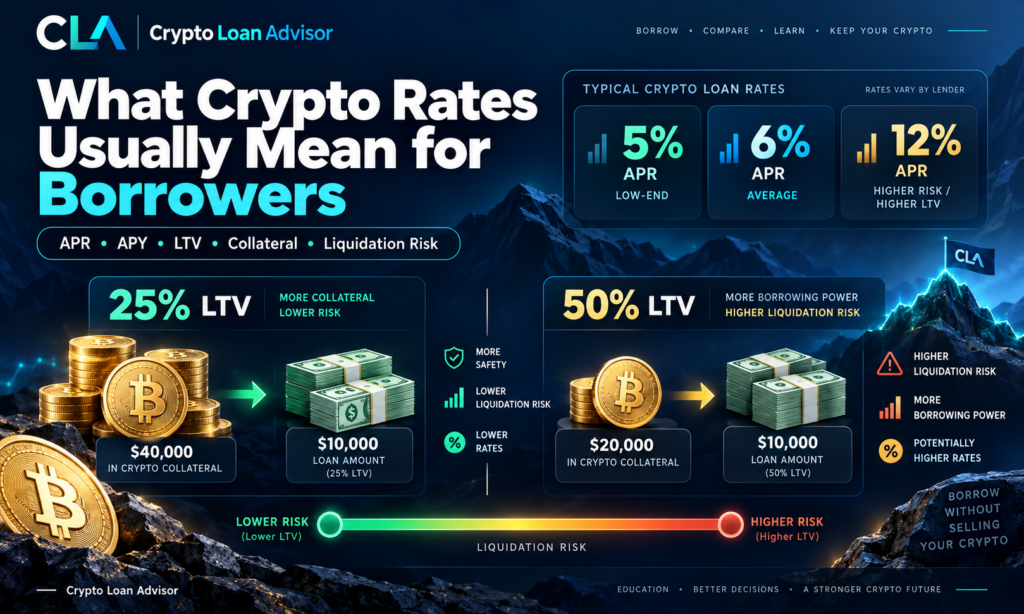
Crypto rates are more than APR. Learn how LTV, collateral volatility, loan terms, and lender structure shape the cost of borrowing against digital assets.
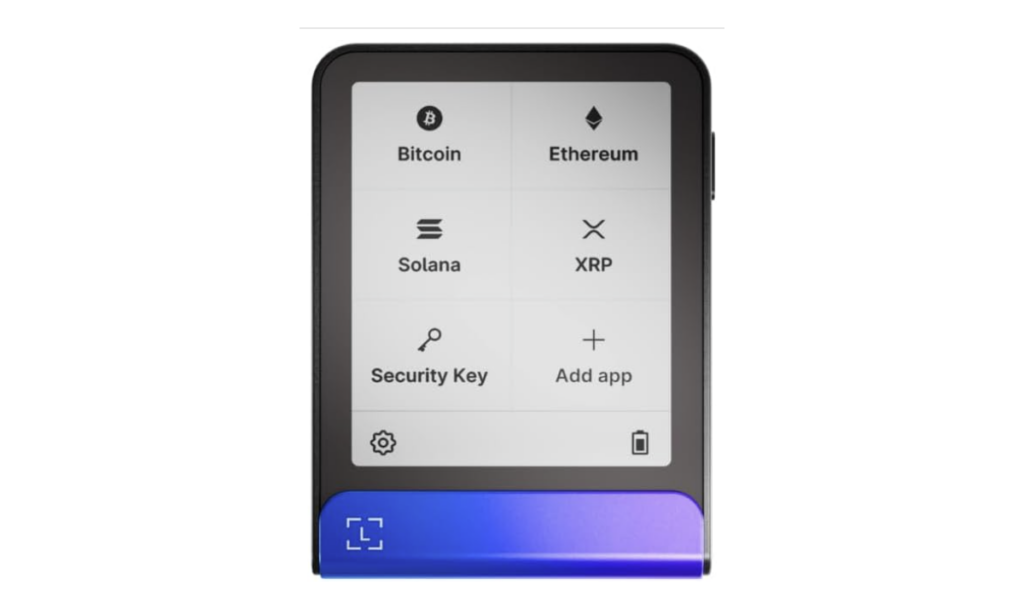
1. Custody Model Self-custodial = you hold your own private keys (most secure, more responsibility) Custodial = a third party holds your keys (easier, but you’re trusting them) 2. Key Storage Cold/hardware wallets store private keys offline — out of reach of remote attackers Hot/software wallets keep keys on internet-connected devices — convenient but more exposed Best practice: use both — a hardware wallet for long-term storage, a software wallet for daily transactions 3. Secure Element (SE) Chip Look for EAL6+ certified Secure Element chips (same tech used in passports and credit cards) More secure than general-purpose microcontrollers 4. Code Transparency Open-source firmware lets security researchers audit the code (e.g., Trezor) Closed-source can still be secure if built on a certified Secure Element (e.g., Ledger) 5. Threat Detection Software wallets that screen transactions in real-time can flag scams before you approve them — a feature hardware wallets alone can’t provide 6. Recovery Method Seed phrase backup — standard but requires secure storage of 12–24 words Seedless recovery (e.g., NFC card-based like Tangem) — simpler but newer Multi-signature and social recovery options add extra layers 7. Air-Gap Support Some wallets (like ELLIPAL Titan) sign transactions entirely offline via QR codes — maximum isolation from online threats Top picks in 2026 per use case: Best overall: Ledger Flex Best open-source: Trezor Safe 5 Best air-gapped: ELLIPAL Titan Best for beginners/seedless: Tangem Best for DeFi: MetaMask (paired with a hardware wallet)

Understand loan default consequences for crypto borrowers, from margin calls and liquidation to credit impact, taxes, lender risk, and smart preparation.