
Author name: Michael Nigeria

Uncategorized

Margin Calls Explained: What Every Crypto Borrower Should Know

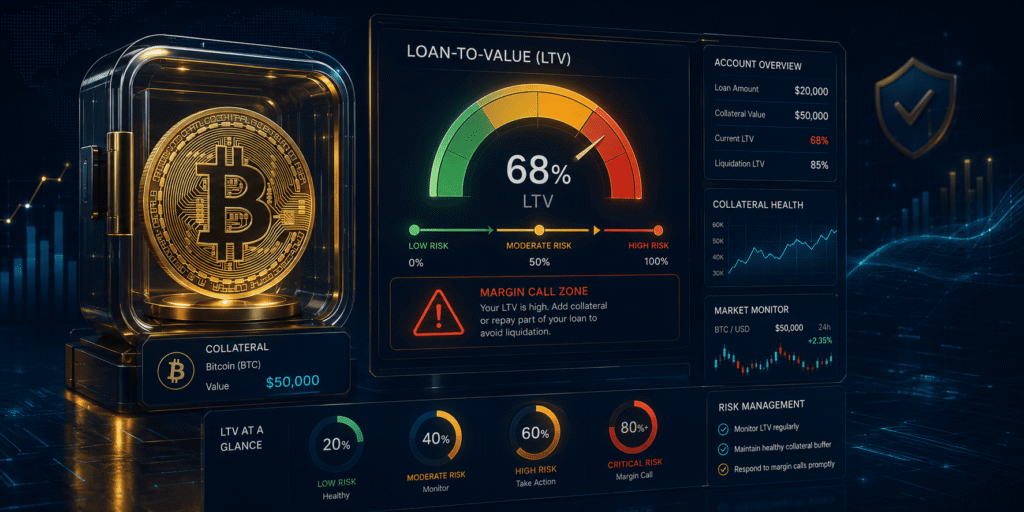
Category: Risk Management What Is a Margin Call? One of the most important concepts in crypto-backed lending is the margin call. A margin call occurs when the value of your collateral falls and your Loan-to-Value (LTV) ratio rises beyond a lender’s acceptable threshold. When this happens, the lender may require you to take action to reduce risk. Understanding margin calls before borrowing can help you avoid unexpected liquidations and protect your assets. Why Margin Calls Happen Crypto markets can be highly volatile. When you take a crypto-backed loan, your digital assets serve as collateral. If the value of that collateral drops significantly, the lender’s risk increases. To manage that risk, lenders establish LTV limits and margin call thresholds. When those thresholds are exceeded, a margin call may be triggered. A Simple Example Imagine you deposit $100,000 worth of Bitcoin as collateral and receive a $50,000 loan. Initial LTV: 50% If Bitcoin’s value falls to $70,000 while your loan remains $50,000, your LTV increases to 71.4%. Depending on the lender’s policies, this increase could trigger a margin call. What Happens During a Margin Call? When a margin call occurs, lenders typically provide several options: Add More Collateral Deposit additional cryptocurrency to reduce your LTV ratio. Repay Part of the Loan Pay down a portion of the outstanding balance. Reduce Risk Exposure Take steps required by the lender to restore acceptable collateral levels. The specific process varies between lenders. What Happens If You Ignore a Margin Call? If no action is taken, the lender may liquidate part or all of the collateral. Liquidation means assets are sold to recover the outstanding loan balance. This is one of the biggest risks associated with crypto-backed borrowing. How to Reduce Margin Call Risk Borrow Conservatively Lower LTV ratios generally provide a larger safety buffer. Monitor Your Collateral Keep track of significant market movements affecting your assets. Maintain Reserve Funds Having additional collateral available can help during volatile periods. Understand Your Lender’s Rules Every platform has different margin call and liquidation thresholds. Questions to Ask Before Borrowing Before taking a crypto-backed loan, ask: Knowing these answers can help you prepare for changing market conditions. The Bottom Line Margin calls are not necessarily a sign that something has gone wrong. They are simply part of the risk management framework used by crypto lenders. The key is understanding how they work before borrowing. Investors who understand LTV, monitor their collateral, and maintain adequate safety buffers are often better positioned to navigate market volatility. At CryptoLoanAdvisor, our mission is simple: Help people make better borrowing decisions.

Crypto Pulse

Understanding Loan-to-Value (LTV): The Most Important Number in Crypto Lending

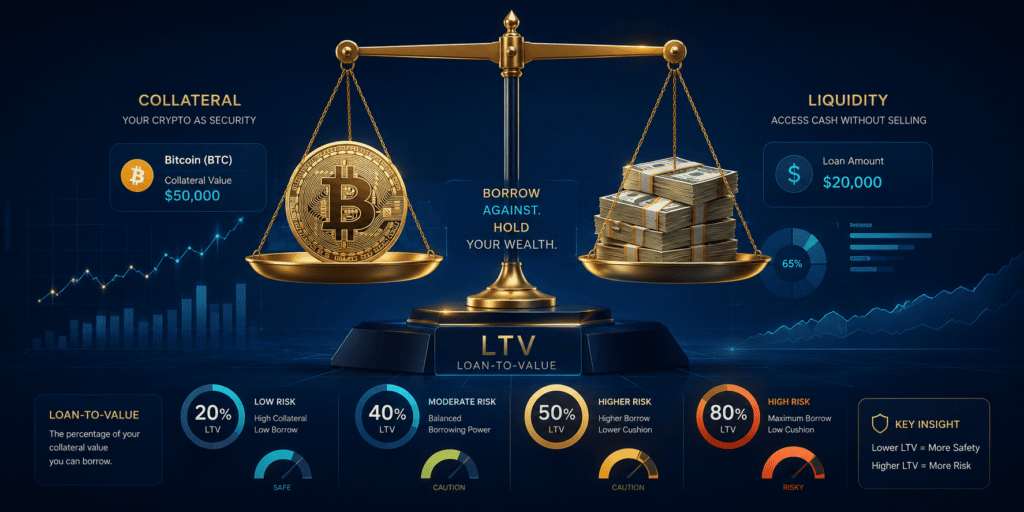
Category: Education What Is Loan-to-Value (LTV)? If you’re exploring crypto-backed loans, one term you’ll encounter repeatedly is Loan-to-Value, commonly known as LTV. LTV measures how much you can borrow compared to the value of the cryptocurrency you use as collateral. In simple terms, it helps determine both your borrowing capacity and your risk level. Understanding LTV is one of the most important steps in making informed borrowing decisions. How LTV Works LTV is expressed as a percentage. LTV = Loan Amount ÷ Collateral Value × 100 Example: LTV = 50% This means you borrowed half the value of your collateral. Why LTV Matters LTV affects nearly every aspect of a crypto-backed loan. Borrowing Power Higher LTVs allow you to access more capital. Risk Exposure Higher borrowing levels generally increase liquidation risk. Interest Rates Some lenders offer better rates at lower LTV ratios. Margin Call Thresholds LTV helps determine when lenders may require additional collateral. Low LTV vs High LTV Lower LTV (20%–40%) Benefits ✓ Lower liquidation risk ✓ Greater flexibility during market volatility ✓ Often preferred by conservative borrowers Potential Drawback ✓ Less cash available immediately Higher LTV (60%–80%) Benefits ✓ Access more liquidity ✓ Maximize borrowing capacity Potential Drawbacks ✓ Higher liquidation risk ✓ Less room for market declines ✓ Greater need to monitor collateral What Happens When Crypto Prices Fall? Crypto markets are known for volatility. Imagine: If Bitcoin falls to $70,000 while the loan remains $50,000: New LTV = 71.4% The lender may require additional collateral depending on their policies. This is why understanding LTV before borrowing is essential. What Is a Margin Call? A margin call occurs when the value of your collateral falls and your LTV rises beyond acceptable limits. When this happens, lenders may ask you to: Failure to respond may result in liquidation of part or all of the collateral. Choosing the Right LTV There is no universal “best” LTV. The right level depends on: Many experienced borrowers choose lower LTV ratios to provide a larger safety buffer during periods of volatility. Questions to Ask Before Borrowing Before taking any crypto-backed loan, ask: Knowing these answers can help prevent surprises later. Final Thoughts Loan-to-Value is more than just a lending metric—it’s one of the most important risk management tools in crypto-backed finance. A lower LTV may reduce borrowing power, but it can also provide greater protection during volatile market conditions. Understanding how LTV works allows you to compare lenders more effectively and make smarter borrowing decisions. At CryptoLoanAdvisor, our goal is simple: help people make better borrowing decisions.

Crypto Pulse

Borrow, Don’t Sell: The Smarter Way to Unlock Liquidity in Crypto

Category: StrategyBy CryptoLoanAdvisor7 min read A New Era for Investors For decades, investors have used appreciating assets as collateral to access liquidity without selling and triggering a taxable event. Real estate, stocks, and businesses have long been used this way. Today, many cryptocurrency investors are exploring a similar approach with Bitcoin, Ethereum, XRP, Solana, and other digital assets. Instead of selling your crypto to access cash, crypto-backed lending allows you to borrow against your holdings while maintaining ownership. This strategy can provide liquidity today while preserving exposure to potential future growth. It reflects a simple philosophy: Retail sells. Wealth borrows. Why Selling Your Crypto Can Cost You Selling may seem like the simplest way to access cash, but it often comes with trade-offs. Trigger Taxable Events Selling cryptocurrency may create capital gains taxes depending on your jurisdiction and personal circumstances. Miss Future Upside Once you sell, you no longer participate in future price appreciation if the market continues higher. Emotional Decision-Making Many investors sell during periods of uncertainty, only to watch prices recover later. Permanent Exit Selling reduces or eliminates your exposure to an asset you may have intended to hold for the long term. How Crypto-Backed Loans Work Crypto-backed loans allow you to use digital assets as collateral in exchange for cash or stablecoins. The basic process is straightforward: Many lenders support assets such as Bitcoin, Ethereum, XRP, Solana, and other major cryptocurrencies. Potential Benefits of Borrowing Maintain Ownership Keep your digital assets rather than selling them. Stay Invested Continue participating in potential future market growth. Access Liquidity Unlock capital without liquidating your portfolio. Flexible Use of Funds Borrowed funds can be used for business opportunities, real estate, taxes, debt consolidation, investments, or personal expenses. Faster Access to Capital Many crypto lending platforms can provide funding much faster than traditional financing options. Important Risks to Understand Borrowing against crypto is not risk-free. Market Volatility Cryptocurrency prices can move significantly in a short period of time. Margin Calls If collateral value falls below required thresholds, additional collateral may be required. Liquidation Risk Failure to meet lender requirements could result in the sale of pledged assets. Interest Costs Loans involve borrowing costs that should be carefully evaluated before proceeding. Understanding both the opportunities and the risks is essential before using any borrowing strategy. Borrowing vs. Selling The decision between borrowing and selling depends on your financial goals, risk tolerance, and overall strategy. Borrowing may be worth considering if you: Selling may be appropriate if: There is no universal answer. The best decision depends on your circumstances. The Bigger Picture For decades, investors have borrowed against appreciating assets such as real estate and stock portfolios rather than selling them. As digital assets continue to mature, many investors are applying the same concept to cryptocurrency. The goal is not simply to borrow. The goal is to make informed financial decisions while preserving flexibility and maintaining ownership of assets you believe in. Final Thoughts Crypto-backed lending is becoming an increasingly important part of digital asset finance. When used responsibly, it can provide access to liquidity without requiring investors to sell their holdings. Understanding how these loans work, comparing lenders carefully, and evaluating both benefits and risks are critical steps before making any borrowing decision. At CryptoLoanAdvisor, our mission is simple: Help people make better borrowing decisions.

Scroll to Top