
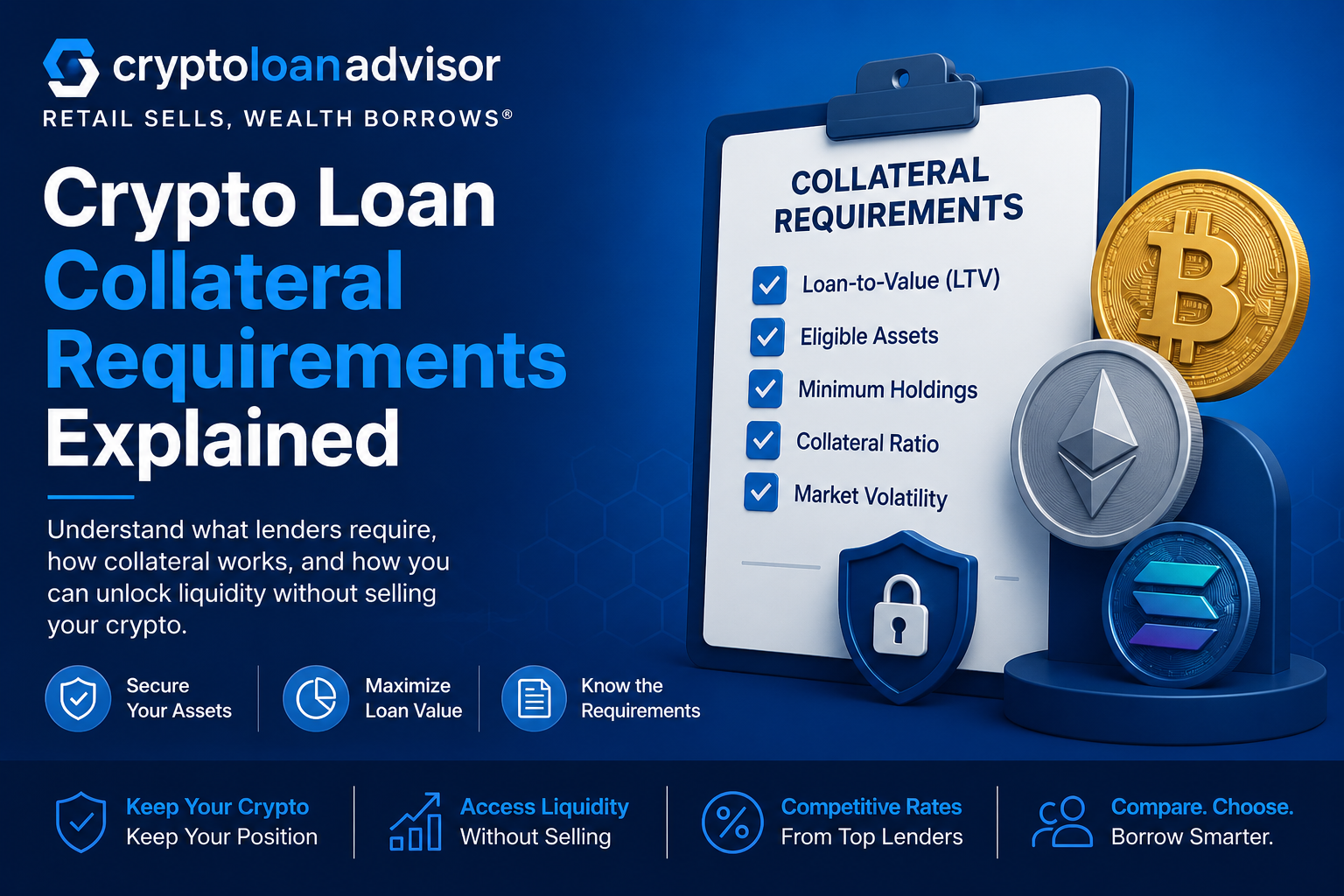
A crypto-backed loan can let a long-term Bitcoin, XRP, Ethereum, or Solana holder raise cash without selling an asset they expect to appreciate. But crypto loan collateral requirements determine whether that flexibility works for you or becomes a forced sale at the worst possible moment. Before comparing rates, understand exactly what you must pledge, how much you can borrow, and what happens if the market falls.
The central trade-off is simple: you retain ownership exposure to your digital assets, but the lender needs enough protection against their volatility. That protection comes through collateral value, conservative loan-to-value limits, custody rules, and the lender’s right to request more collateral or liquidate it if your loan becomes too risky.
What counts as collateral for a crypto loan?
Collateral is the digital asset you pledge to secure a loan. Unlike an unsecured personal loan, approval is generally driven less by your income or credit profile and more by the market value and liquidity of the crypto you deposit. The lender takes control of the collateral for the life of the loan, while you receive dollars, stablecoins, or another supported loan currency.
Bitcoin and Ethereum are the most commonly accepted collateral because they trade deeply, have established markets, and can be priced continuously. Some providers also support XRP, Solana, and selected large-cap tokens. Acceptance is not a statement that one asset is better than another. It is a lender’s assessment of whether it can reliably value and sell that asset if necessary.
A token may be eligible at one platform and unavailable at another. Even when two lenders accept the same asset, they may assign different borrowing limits to it. Bitcoin may support a higher loan-to-value ratio than a more volatile altcoin, for example. Do not assume that the value visible in your wallet equals the value a lender will recognize for borrowing purposes.
Crypto loan collateral requirements start with LTV
Loan-to-value, or LTV, is the percentage of your collateral’s current value that you borrow. It is the number that connects your loan amount to your liquidation risk.
If you pledge $100,000 in BTC and borrow $30,000, your starting LTV is 30%:
`$30,000 loan / $100,000 collateral = 30% LTV`
Lower LTV means more collateral cushions your loan against a market decline. Higher LTV gives you more immediate liquidity but leaves less room for error. A 20% to 35% starting LTV is typically more defensive for a holder who wants to weather sharp moves. A 50% LTV may be available through certain products, but it requires active monitoring and a concrete plan for a drawdown.
LTV changes after funding because crypto prices change. If the $100,000 of BTC collateral above falls to $60,000 while the loan balance remains $30,000, the LTV rises to 50%. You did not borrow another dollar, yet the loan has become materially riskier.
Interest can also raise LTV over time if it is added to the balance rather than paid monthly. Ask whether interest accrues onto principal, whether origination fees are deducted from proceeds, and whether those costs count toward the lender’s risk calculations.
Initial LTV, margin-call LTV, and liquidation LTV
These three figures should be read together, not separately.
Initial LTV is where your loan begins. Margin-call LTV is the point where the lender asks you to restore the account, often by adding collateral, paying down principal, or doing both. Liquidation LTV is the threshold where the lender can sell some or all pledged assets to reduce its exposure.
For example, a product might originate at 30% LTV, issue a margin call at 55%, and liquidate at 65%. Those terms may sound comfortable until you model a fast market move. A 30% starting LTV offers more breathing room than a 50% starting LTV, even if both loans have the same stated liquidation threshold.
The exact mechanics matter. Some lenders provide notices and a cure period. Others may liquidate automatically once a threshold is reached, particularly during rapid volatility. Read whether a margin call is discretionary or automatic, how alerts are delivered, how long you have to respond, and whether the lender can sell collateral without further consent.
How much collateral should you pledge?
The right amount is not simply the minimum required for approval. It is the amount that supports your cash need without putting a core long-term position under avoidable pressure.
Start with the loan proceeds you actually need. Borrowing more because collateral makes it available can increase interest expense and raise the chance of a margin event. Then choose a target LTV based on your asset’s volatility, your ability to add collateral, and the purpose of the loan.
A borrower using funds for a short-term business opportunity may accept a different risk profile than someone borrowing for recurring living expenses. The second borrower should be especially cautious: if repayment depends on future income that is uncertain, a falling crypto market can turn a liquidity solution into a compounding problem.
It also matters whether your pledged assets represent your entire crypto portfolio. Using a concentrated Bitcoin position as collateral is different from pledging a modest portion of a diversified portfolio. Concentration does not automatically make borrowing inappropriate, but it should push you toward a lower LTV and a larger reserve.
The collateral assets and custody terms matter
Crypto loan collateral requirements are not only about percentages. They also define where assets go, who controls keys, and how assets are held while your loan is outstanding.
In most crypto-backed loan structures, you transfer collateral from your wallet to an address or custodian designated by the lender. That means you give up direct control of those coins until repayment and release. You may retain economic exposure to price appreciation, but you generally cannot trade, stake, vote, or move the collateral during that period.
Ask clear questions about the arrangement. Is collateral held in segregated accounts or pooled wallets? Does the platform use a qualified custodian or self-custody technology? Is rehypothecation permitted, meaning can the lender use or lend out your pledged assets? What happens if the provider experiences operational distress, bankruptcy, or a cyber incident?
There is no universal answer that fits every borrower. A lower advertised rate may not compensate for weak transparency around custody, insurance claims, legal ownership, or counterparty risk. CryptoLoanAdvisor’s comparison mindset is useful here: evaluate the full loan structure, not one promotional number.
Build a margin plan before funding
A margin plan is a decision framework you create while markets are calm. It prevents an emotional scramble when collateral prices are falling.
First, calculate the collateral price that would trigger a margin call and the price that could trigger liquidation. Do not rely only on a platform dashboard. Make your own estimates using the loan balance, stated thresholds, and a conservative assumption for accrued interest.
Second, identify your response options in advance. You may add eligible collateral, repay part of the loan, or accept a partial liquidation if the agreement allows it. Each option has a cost. Adding coins increases your exposure to the lender, paying down debt uses cash, and liquidation can permanently reduce your position and potentially create tax consequences.
Third, keep a separate liquidity reserve. A borrower whose entire cash balance is committed elsewhere may be unable to cure a margin call even when the loan was sensibly sized at origination. The reserve does not need to be excessive, but it should be real and accessible.
Finally, decide your personal stop point. If Bitcoin or another pledged asset drops sharply, will you add collateral, repay debt, or reduce the position before the lender’s threshold? Setting that rule ahead of time protects you from making a high-stakes choice in a volatile hour.
Common mistakes when evaluating collateral requirements
The most expensive mistake is treating maximum borrowing capacity as a recommendation. A lender may permit a high LTV because its terms allow for rapid liquidation. That does not mean the structure fits a long-term holder whose priority is preserving ownership.
Another mistake is overlooking asset-specific haircuts. A platform may value $100,000 of a less liquid token at less than its spot market value for collateral purposes, or it may impose a lower maximum LTV. Check the approved collateral value, not merely the quantity of tokens you hold.
Borrowers also underestimate timing risk. Crypto markets trade around the clock, while support teams, bank wires, and your own ability to move funds may not. A weekend price move can test a loan before you have time to send cash or transfer additional assets.
Tax treatment deserves attention as well. Receiving loan proceeds is generally different from selling crypto, but interest deductibility, liquidation events, and state-specific issues can be complex. A tax professional who understands digital assets can help you evaluate your own facts before you pledge a meaningful position.
A disciplined way to compare loan offers
Compare offers using the same requested loan amount and the same collateral asset. Then look beyond the headline rate: review initial LTV, margin-call and liquidation thresholds, interest calculation, fees, repayment flexibility, custody model, supported collateral, and the lender’s policies during volatility.
A loan with a slightly higher rate may be the stronger choice if it offers a lower starting LTV, clearer margin procedures, and terms you can realistically manage. Conversely, a cheap rate loses its appeal if the collateral structure forces you to run too close to liquidation.
Borrowing against crypto is most useful when it expands your options without putting your ownership thesis at unnecessary risk. Treat collateral as the price of that flexibility, size the loan for a difficult market rather than an optimistic one, and preserve enough room to make decisions on your terms.




