Category: Education
What Is Loan-to-Value (LTV)?
If you’re exploring crypto-backed loans, one term you’ll encounter repeatedly is Loan-to-Value, commonly known as LTV.
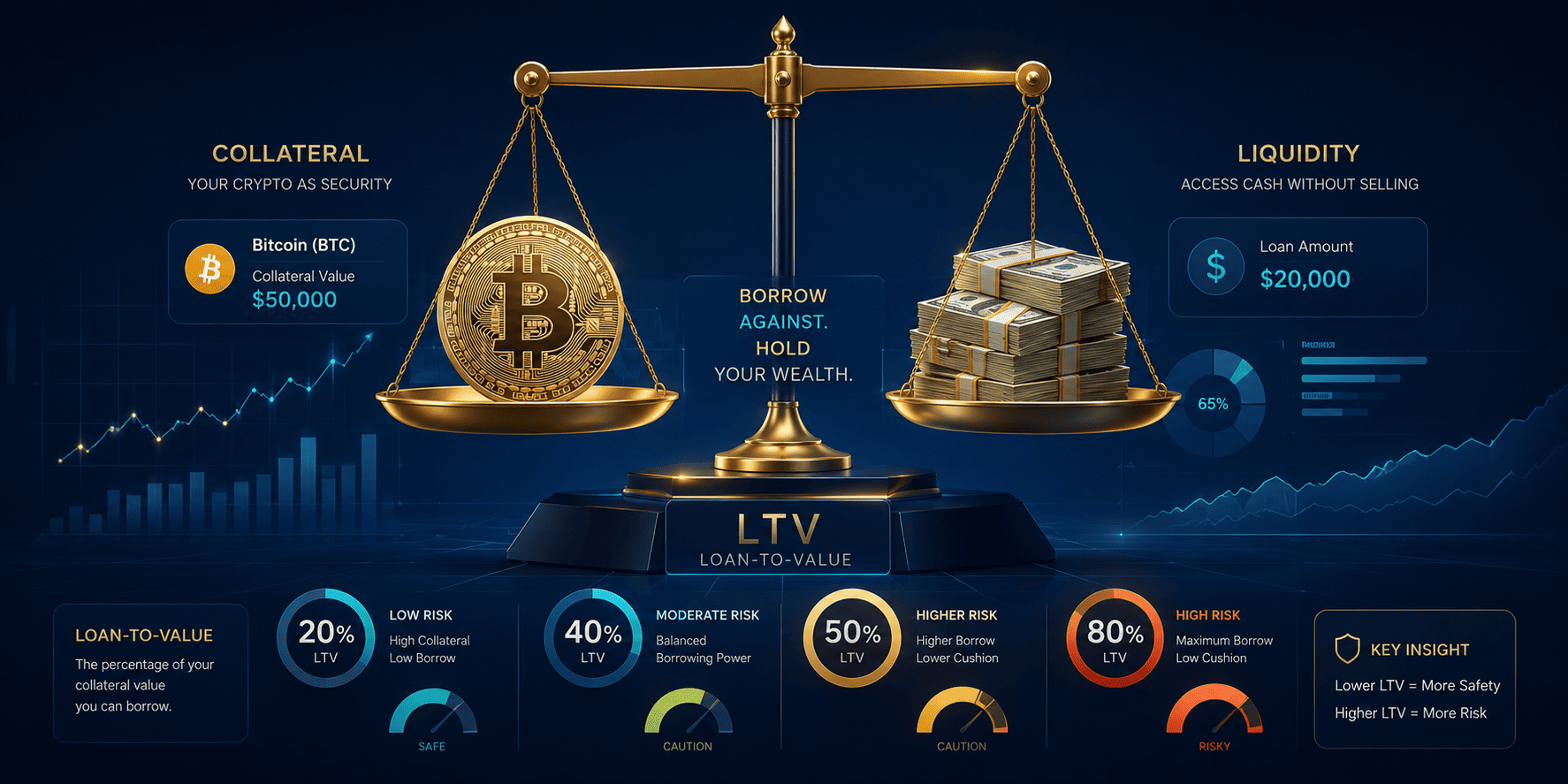
LTV measures how much you can borrow compared to the value of the cryptocurrency you use as collateral.
In simple terms, it helps determine both your borrowing capacity and your risk level.
Understanding LTV is one of the most important steps in making informed borrowing decisions.
How LTV Works
LTV is expressed as a percentage.
LTV = Loan Amount ÷ Collateral Value × 100
Example:
- Bitcoin collateral value: $100,000
- Loan amount: $50,000
LTV = 50%
This means you borrowed half the value of your collateral.
Why LTV Matters
LTV affects nearly every aspect of a crypto-backed loan.
Borrowing Power
Higher LTVs allow you to access more capital.
Risk Exposure
Higher borrowing levels generally increase liquidation risk.
Interest Rates
Some lenders offer better rates at lower LTV ratios.
Margin Call Thresholds
LTV helps determine when lenders may require additional collateral.
Low LTV vs High LTV
Lower LTV (20%–40%)
Benefits
✓ Lower liquidation risk
✓ Greater flexibility during market volatility
✓ Often preferred by conservative borrowers
Potential Drawback
✓ Less cash available immediately
Higher LTV (60%–80%)
Benefits
✓ Access more liquidity
✓ Maximize borrowing capacity
Potential Drawbacks
✓ Higher liquidation risk
✓ Less room for market declines
✓ Greater need to monitor collateral
What Happens When Crypto Prices Fall?
Crypto markets are known for volatility.
Imagine:
- Bitcoin collateral value: $100,000
- Loan amount: $50,000
- Initial LTV: 50%
If Bitcoin falls to $70,000 while the loan remains $50,000:
New LTV = 71.4%
The lender may require additional collateral depending on their policies.
This is why understanding LTV before borrowing is essential.
What Is a Margin Call?
A margin call occurs when the value of your collateral falls and your LTV rises beyond acceptable limits.
When this happens, lenders may ask you to:
- Add more collateral
- Repay part of the loan
- Reduce overall risk exposure
Failure to respond may result in liquidation of part or all of the collateral.
Choosing the Right LTV
There is no universal “best” LTV.
The right level depends on:
- Your risk tolerance
- Market outlook
- Financial goals
- Ability to add collateral if needed
Many experienced borrowers choose lower LTV ratios to provide a larger safety buffer during periods of volatility.
Questions to Ask Before Borrowing
Before taking any crypto-backed loan, ask:
- What is the maximum LTV offered?
- At what LTV does a margin call occur?
- At what LTV does liquidation occur?
- Can I add collateral at any time?
- How often is collateral monitored?
Knowing these answers can help prevent surprises later.
Final Thoughts
Loan-to-Value is more than just a lending metric—it’s one of the most important risk management tools in crypto-backed finance.
A lower LTV may reduce borrowing power, but it can also provide greater protection during volatile market conditions.
Understanding how LTV works allows you to compare lenders more effectively and make smarter borrowing decisions.
At CryptoLoanAdvisor, our goal is simple: help people make better borrowing decisions.